Showing posts with label Diversity. Show all posts

Monday, April 13, 2026

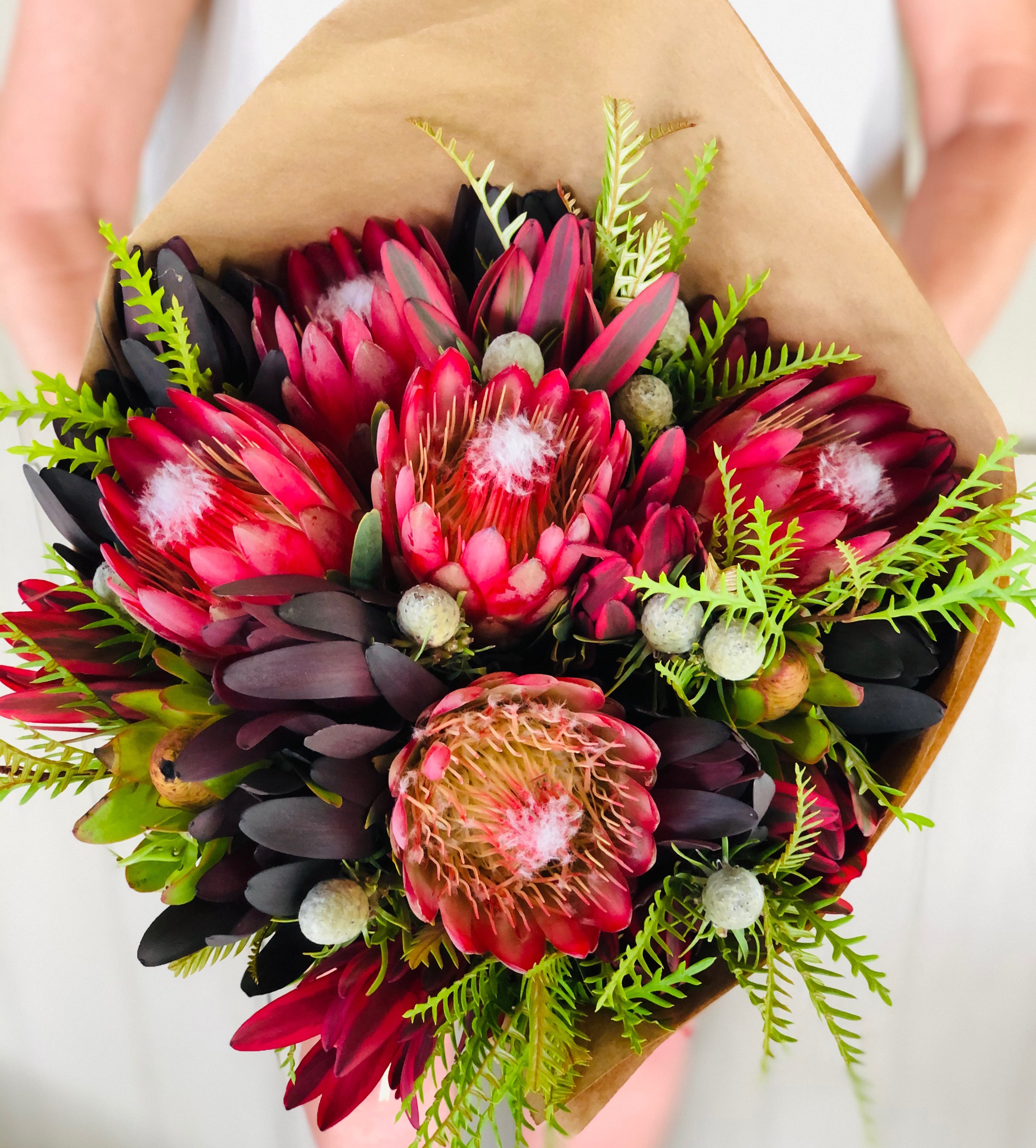
Not Your Average Bloom: The Power of the Protea King


There’s something undeniably regal about the King (cynaroides). With its wide, crown-like bloom and dense floral center, it doesn’t just sit quietly in bouquets… it commands attention. Known as one of the oldest flowering plants on Earth, the Protea King carries with it a sense of history, resilience, and natural artistry that few flowers can match.

At its core, the King symbolizes transformation, courage, and diversity. Its name comes from the Greek god Proteus, who could change his form at will… an apt connection for a flower that represents adaptability and the beauty of embracing change. In many ways, it’s a reminder that growth often comes from the willingness to evolve, to stretch beyond comfort, and to stand boldly in one’s uniqueness.


Visually, the King is unforgettable. Its large bloom, often spanning up to a foot in diameter, features layers of bracts that range from creamy white to pink, fuchsia, and red surrounding a plush, almost otherworldly center. This dramatic structure makes it a natural focal point in floral design. When incorporated into bouquets, it instantly elevates the arrangement from simple to striking.

Kings are often used to establish balance and visual weight in a bouquet. Pairing them with softer, more delicate flowers… like pincushions, waxflower, or grevillea… creates a beautiful contrast that highlights both strength and softness. The King’s bold shape works especially well in modern, minimalist arrangements, but it can also add an unexpected twist to more romantic, garden-style bouquets.


Beyond aesthetics, there’s an emotional resonance to including Kings in designs. It’s a flower that tells a story of endurance, individuality, and natural beauty that refuses to be overlooked. Whether used in bouquets or arrangements, it brings a sense of intention and meaning.

In a world where trends come and go, the King stands timeless. It doesn’t try to blend in, and that’s precisely its magic. It reminds us that sometimes, the most powerful statement we can make is simply to be bold, authentic, and unapologetically ourselves.

Monday, April 29, 2024

Proteas: Think Twice Before You Fertilize


Did you know California is one of five Mediterranean-climate regions on the earth where proteas are grown? It’s true! And since springtime is a popular planting time… I have an important growing tip for you.


These amazing plants are cherished for their exotic flowers and foliage that symbolize diversity and resilience. Thanks to their wide variety and low maintenance, proteas can easily be grown in California and bring long-lasting color year after year.


When it comes to resilience, proteas are notorious for thriving in poor, infertile soils. Why? They have ‘cluster’ roots that benefit from nutrients released from decomposing leaves. What’s intriguing is their ability to access enough phosphorus when there is very little available. It’s due to the citrate acid that is released by their roots and is bound to the soil. The citrate frees the phosphorus allowing it to be taken up by the roots. Proteas are very sensitive to phosphorus, and so phosphorus fertilizers can be deadly. Most plants stop absorbing phosphorus when they have their fill, but proteas don’t know when to stop. They take it all… making them sick to the point of dying.

Wednesday, January 17, 2024

Winter Bliss


Need a little extra "oomph" during these cold, gloomy winter days? You got it. Plenty of winter proteas bloom during the year's shortest and darkest days, just when you need color the most! It’s easy to capture the beauty of the season with these fabulous florals and there’s such a surprising diversity of varieties and colors to choose from. So why not enjoy all that’s available?

Protea like Andrea, Brenda and Pink Ice are eagerly available and when mixed in an arrangement they’re sure to brighten your sacred space. Surprising foliage like Leucadendron Tricolor, Duet and Salignum can bring unexpected color and lovely texture to a design too. Plus, some varieties of Leucospermum like Sunrise start blooming in early winter and the striking orange hue adds a lovely contrast. Soft silvery-green argenteum or Silver Tree, spiky Grevillea flowers and fragrant eucalyptus Parvifolia with heart shaped leaves can transform a classic design into a cheerful wintry display.


There’s no doubt, the best way to turn the ‘Winter Blues’ into 'Winter Bliss' is to surround yourself with plenty of vivid colors and extraordinary textures. With proteas, it's easy to create a design that takes the chill out of the season and delivers a well-deserved pick-me-up.

Friday, December 23, 2022

2023 Color of the Year: Viva Magenta


CHEERS to the Pantone Color of 2023: Viva Magenta 18-1750. Described as “a shade rooted in nature descending from the red family and expressive of a new signal of strength.” Considering this hue is meant to “encourage experimentation and self-expression without restraint”, it’s fitting that protea lovers will embrace this color. Not only are there plenty of magenta protea to choose from but, they too are symbolic of diversity, individuality and the courage to stay true to oneself.

Viva Magenta is “powerful, empowering, brave and fearless, and a pulsating color whose exuberance promotes a joyous and optimistic celebration. It is a new animated red that revels in pure joy, an electrifying, and a boundaryless shade that is manifesting as a stand-out statement. Viva Magenta welcomes anyone and everyone with the same verve for life and rebellious spirit. It is a color that is audacious, full of wit and inclusive of all”.


When it comes to proteas which are appreciated for their vast selection, meanings and overall “unique” nature, this color selection is perfect. Here’s just a few of our picks to look for in 2023.


Ceres


Venus


Brenda


Andrea


Lienbencherry

Monday, September 13, 2021

Proteas: The Myth and The Meanings


Dating back approximately 300 million years, Proteas are one of the oldest families of flowering plants on the planet. It is believed that the protea genus originated on the super-continent Gondwana. When the continent eventually split, they were spread primarily across Australia and South Africa.

Proteas were named after the sea god Proteus in Greek mythology, who was the prophetic old man of the sea and shepherd of the sea's flock. Proteus protected the seals of Poseidon on the island of Pharos, near the mouth of the Nile, and was able to adopt any shape he wished. He knew all things - past, present, and future and disliked sharing his knowledge. If you wanted to consult him, you had to surprise him during his siesta and tie him up. Even when caught, he would try to escape by assuming many different shapes. If you were able to trap Proteus, he would return to his original shape, answer your questions, and plunge back into the sea.

Because of the intriguing myth that it comes with Proteas, and their unique charm, the family is known to symbolize extraordinary beauty, embracing diversity and individuality + the courage to stay true to oneself.


Diversity… Named after the god Proteus, it’s no wonder that the proteas symbolize diversity. It’s also associated with social unity and accepting one’s individuality. After all, they’re unique in so many ways, and can be found in many colors, hues, textures, shapes and sizes.


Courage & Resilience… The fact that proteas have existed for so long, thrive in extreme geographical areas and can endure harsh weather conditions - even wildfires, makes them the perfect symbol for strength, resilience and courage.


Transformation & Change… Proteas often represent change, transformation and hope, since the plant amiably restores itself after severe wildfires.


Beauty and Individuality… This family also represents beauty, which is fitting for their exotic and unique appearance. When placed next to other beautiful flowers, proteas will stand out in any arrangement. The flower’s unique appearance is often perceived as a symbol of distinctive beauty, individuality and courage to stay true to oneself.


Longevity… Dating back 300 million years, Proteas are among the oldest flowers we know. This link associates it with longevity and long life.


Monday, December 28, 2020

Protea Brenda


In the language of flowers, protea is said to symbolize diversity and courage… and if Brenda had her own special language, she would be the symbol of resilience too! When asked to describe this gorgeous bloom, the first words that come to mind are hot pink and faux. The dark pink bracts or petals which surround Brenda are shiny and durable not soft and velvety like many other protea. STUNNING. And, perfect if you’re into self-care and hoping to start 2021 off on the right foot.


As COVID continues to impact our daily lives, flowers are more vital than ever for our health and well-being (apparently, pink flowers, that often convey a message of romance, also stand for love for one’s self… which, by the way, is super important right now). While navigating through the challenges of this “new normal”, they’ll bring a much-needed dose of happiness to break anyone out of a stress-induced funk.


Photo by @kwiaciarniawtepedy


Photo by @constantiapera

Finally, as a reminder… no one needs a reason to ask if they deserve flowers today - the answer will always be YES!

Wednesday, July 10, 2019

Grevillea Foliage


Within the wonderfully diverse world of proteaceae, the Grevillea genus is starting to rank among the most coveted, captivating, and cool. This Australian genus includes almost three hundred species, numerous subspecies, and more than a thousand cultivars (a number that continues to grow). These amazing botanicals are not only popular for their colorful spider-like flowers, the foliage is fabulous too. Grevilleas helps create height, movement, dimension and textures in bouquets, arrangements and displays.


Ivanhoe is a hybrid cultivar derived from combination of G. Longifolia and G. Caleyi. It has very attractive serrated and deeply cut foliage with deep green leaves and silver undersides, while new growth is a reddish bronze color.


Hookeriana or also called Robin Hood, is hardy, prolific and versatile species. This lush plant which can reach heights of up to 7’ tall, has glossy, dark green, deeply divided foliage with bronze-brown stems.


Robusta or more commonly known as the southern silky oak, silk oak or silky oak, silver oak or Australian silver oak, is an evergreen tree with olive-green, fern-like leaves that have a beautiful silvery undertone.


Asplendifolia or longifolia has long (6 to 10”), straight army green leaves with a slight rust-red tinge when young and their undersurfaces are covered with flat, silky brownish hairs.

Grevilleas develop small cone-like buds and toothbrush-like flowers that are displayed primarily late winter through spring. This versatile foliage not only adds a distinctive texture and color to designs, they typically have a vase life of 14 days or longer.

Sunday, September 24, 2017

In the Field: Banksia Menziesii


Menziesii is also referred to as Menzies' banksia, firewood banksia, port wine banksia or 'Raspberry Frost' – all very suitable nicknames for this fabulous flower.


Menziesii blooms in the fall when the reddish flowers begin to open from the base. Gradually taking their time, sometimes taking weeks, row after row of flowers open until the flowering reaches the top of the cone, looking like splendid candles on a Christmas tree.


This banksia’s essence certainly seems to parallel with The Language of Flowers and the symbol of Protea – Courage and Diversity! Menziesii, not only is a beautiful flower, but strong and powerful one as well. And when it comes to diversity… it looks fabulous mixed with other flowers and foliage.


Saturday, September 16, 2017

What is Fynbos?


Fynbos - pronounced fain-boss - is the vegetation that is found growing naturally on the the mountains and coastal plains of south-western tip of South Africa. It is unique to this area. The name comes from the Dutch fijn and bosch meaning fine bush referring to the very small leaves and flowers of many of the species. Fynbos makes up 80% of the Cape Floristic Region (often called the Cape Floral Kingdom).


Fynbos is characterized by the presence of four main plant groups: Restios, proteas, heaths and geophytes, as well as seven plant families that only occur in fynbos.


Restios


Protea


Silver Tree


Leucadendron and Mimetes


Heaths


Bruniaceae

What's so special about fynbos?

Fynbos is amazingly diverse and exceptionally rich in species, and it occupies a relatively tiny area of land. Over 7,000 species occur in 41,000 km, and 80% of them occur nowhere else on Earth.

The Cape Peninsula alone has 2,600 species - that's more than the total number of species in the British Isles - crammed into an area smaller than London.

Compare species diversity with other heathland communities in Australia and the California, and with the rest of South Africa:

  • Cape Floristic region - 94 species per 1,000 km
  • Australia - 14 species per 1,000 km
  • California - 12 species per 1,000 km
  • The rest of S. Africa - 8 species per 1,000 km

When you walk through fynbos you can discover a new species with every step.