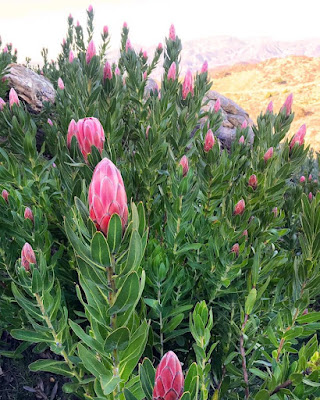
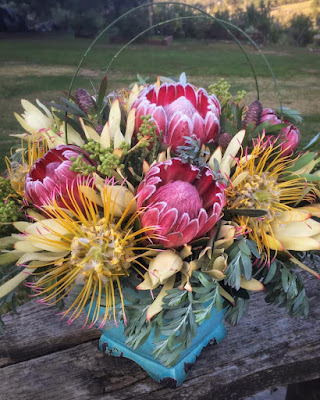
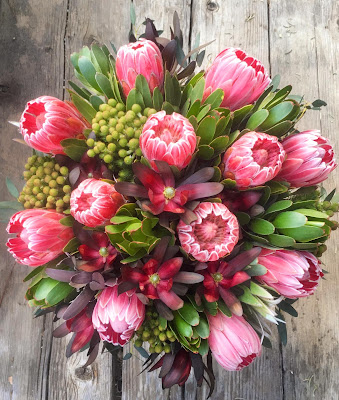
Did you know California is one of five Mediterranean-climate regions on the earth where proteas are grown? It’s true! And since autumn tends to be the ideal planting time… we have a few growing tips for you.
-
Plant in a sunny location where the air flows freely around the plant.
- Planting on slopes or slightly elevated mounds is often beneficial because water runoff decreases drainage problems.
- Proteas flourish in sandy, acidic, well-drained and rocky soils.
- Dig a hole twice the size of the pot the plant came in. Be sure to break up the soil that is removed from the hole to soften its texture.
- Never disturb the soil around the roots.
- Water deeply once a week for the first two years after planting.
- Apply mulch like bark or wood chips around the plant (a slight distance from the stem) as it helps control weed growth and keeps the soil cool.
- Fertilizers are not necessary as proteas grow naturally in very nutrient-poor soils.
Wondering how to prune your protea plants to keep them happy and ensure a bountiful harvest once they’re established? First, be sure to pick the flowers as it’s the best way to keep plants neat and compact. Remove the blooms with a good length of stem, leaving new growth behind. To encourage bushy growth… prune only the flowered stems as the un-flowered stems are next season’s blooms.
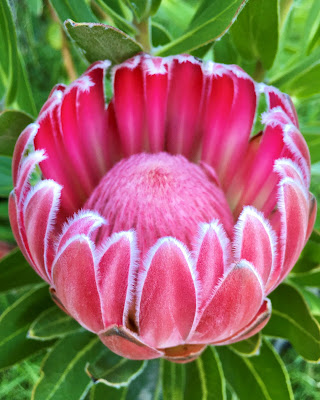
Spring is a long way off, but if you could use a winter pick-me-up, we have the perfect antidote. Pink Duke… a bright, cheery and vibrant protea. This lovely cultivar produces large, rose-pink blooms with a light pink central dome and white feathery tips. Pink Duke has the soft green leaves of the P. magnifica (queen) and the clear velvety, pink flower of the P. Trish Compacta.
Pink Duke blooms winter through early spring, delivering a bounty of beauty, love and joy from new years, right into Valentine’s Day.
There is no doubt that Pink Duke brings an abundance of winter cheer in the fields. But once harvested, arranged, and mixed with an array of other gorgeous florals, they are simply contagious!
Spring may be a long way off, but if you could use a winter pick-me-up right this minute, we have the perfect antidote. A gorgeous protea cultivar that’s certain to boost your spirits and take the chill out of a cold winter day.
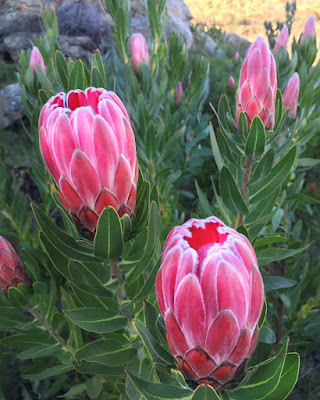
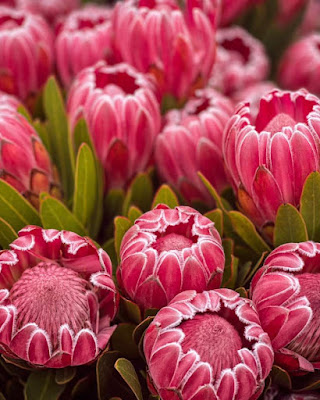
Trish Compacta! Think Pink and so velvety soft (don’t you just want to reach out & feel those satiny petals?). This protea is a wonderful mix of compacta and laurifolia with the classic flawless-colored floral bracts in a rich pink (like compacta) and silvery-white highlights that surround the same pink colored center dome. Trish Compacta blooms winter through early spring… which means you should be enjoying them, umm right now!
When harvested and mixed with other proteas (and some textural Berzelia), there’s no doubt Trish Compacta delivers nature's best remedy to cure the winter blues.
Few things look more exhilarating during these cold winter days of January than a bounty of gorgeous Protea Trish Compacta, in bloom… stretching high up in the sky on long, sturdy stems against a scenic backdrop. Their bright, vibrant flowers and lush, green foliage certainly have a way of taking the ‘chill out of the air’!
Yes, bring on the Protea Trish Compacta! Think Pink and so velvety soft (don’t you just want to reach out & feel those satiny petals?). This protea cultivar is a wonderful mix of compacta and laurifolia with the classic flawless-colored floral bracts in a rich pink (like compacta) and silvery-white highlights that surround the same pink colored center dome. Trish Compactas bloom winter through early spring… which means you should be enjoying them, umm right now!
When harvested and mixed with other proteas (and some textural Berzelia and eucalyptus), there’s no doubt Trish Compacta can take the chill out of any winter day.
Spring is a long way off, but if you could use a winter pick-me-up right this minute, we have the perfect antidote. ‘Pink Duke’… a bright, cheery and vibrant protea—this lovely cultivar produces large, rose-pink blooms with a light pink central dome and white feathery tips. It has the soft green leaves of the P. magnifica (queen) and the clear velvety, pink flower of the P. Trish Compacta.
There is no doubt that Pink Dukes bring an abundance of winter cheer out in the fields. But once harvested, arranged and displayed they are contagious – the perfect pick-me-up.