Showing posts with label Growing Tips. Show all posts

Tuesday, June 24, 2025

Paws-itively Stunning: Kangaroo Paws 🐾🌿


Native to Australia, Anigozanthos get their common name Kangaroo Paws from the quirky shape of their tubular flowers, which resemble the paw of a kangaroo. Each flower is covered in soft, velvety fuzz and curls in a way that says, "Look at me!"

These perennial beauties are part of the Haemodoraceae family. They thrive in warm, dry climates and are loved by gardeners, landscapers, and hummingbirds alike.

If you're into color, prepare yourself. Kangaroo paws come in an eye-popping range of shades, like:

❤️ Big Red – For a blast of excitement and energy.


πŸ’› Golden Yellow – Brilliance that radiates like sunshine.


❤️ Bush Pearl – A romantic pink that’s soft but never shy.


πŸ’š Green Jade – An earthy green with a futuristic vibe.


🧑 Orange – Like a sunset wrapped in velvet.


πŸ’œ Purple – For a little touch of mystery.

Kangaroo paws aren’t just pretty… they're practical. Their tubular flowers are made for birds and bees, making them a magnet for pollinators. Hummingbirds and bees, all flock to these fuzzy flowers like it's a buffet.


Don’t let their dazzling appearance fool you, kangaroo paws are hardy. They love full sun, tolerate drought, and once established, need minimal pampering. Just a little pruning and they’re off blooming again.

🌱 Growing Tips for Pawesome Success
  • Sunshine? Yes please! These are full-sun divas. 
  • Water? Keep it moderate. They like to dry out a bit between drinks. 
  • Soil? Think sandy and well-drained. No soggy paws! 
  • Pruning? Be bold. Cut back the old flower stalks to encourage more blooming.

So next time you're looking for something a little wild, and a whole lot wonderful… make a little room for kangaroo paws – they’re paws-itively stunning!

Friday, August 30, 2024

How to Grow and Care for Proteas


Did you know California is one of five Mediterranean-climate regions on the earth where proteas are grown? It’s true! And autumn tends to be the ideal planting time as plants gain maximum sun exposure without it being too hot. Here are a few growing tips to get your fall planting started.

  • More sun means more flowers, so be sure to plant them in a sunny location where the air flows freely around the plant. 
  • Raised beds and sunny slopes are best as water runoff decreases drainage problems. 
  • Proteas flourish in sandy, acidic, well-drained and rocky soils. 
  • Dig a hole twice the size of the pot the plant came in. Be sure to break up the soil that is removed from the hole to soften its texture. 
  • Never disturb the soil around the roots. 
  • Water deeply once a week for the first two years after planting.
  • Apply mulch like bark or wood chips around the plant (a slight distance from the stem) as it helps control weed growth and keeps the soil cool. 
  • Fertilizers are not necessary as proteas grow naturally in very nutrient-poor soils.

Wondering how to prune your protea plants to keep them happy and ensure a bountiful harvest once they’re established? First, be sure to pick the flowers as it’s the best way to keep plants neat and compact. Remove the blooms with a good length of stem, leaving new growth behind. To encourage bushy growth… prune only the flowered stems as the un-flowered stems are next season’s blooms.

Saturday, April 22, 2023

Spring’s Finest: Leucospermum – Pincushions


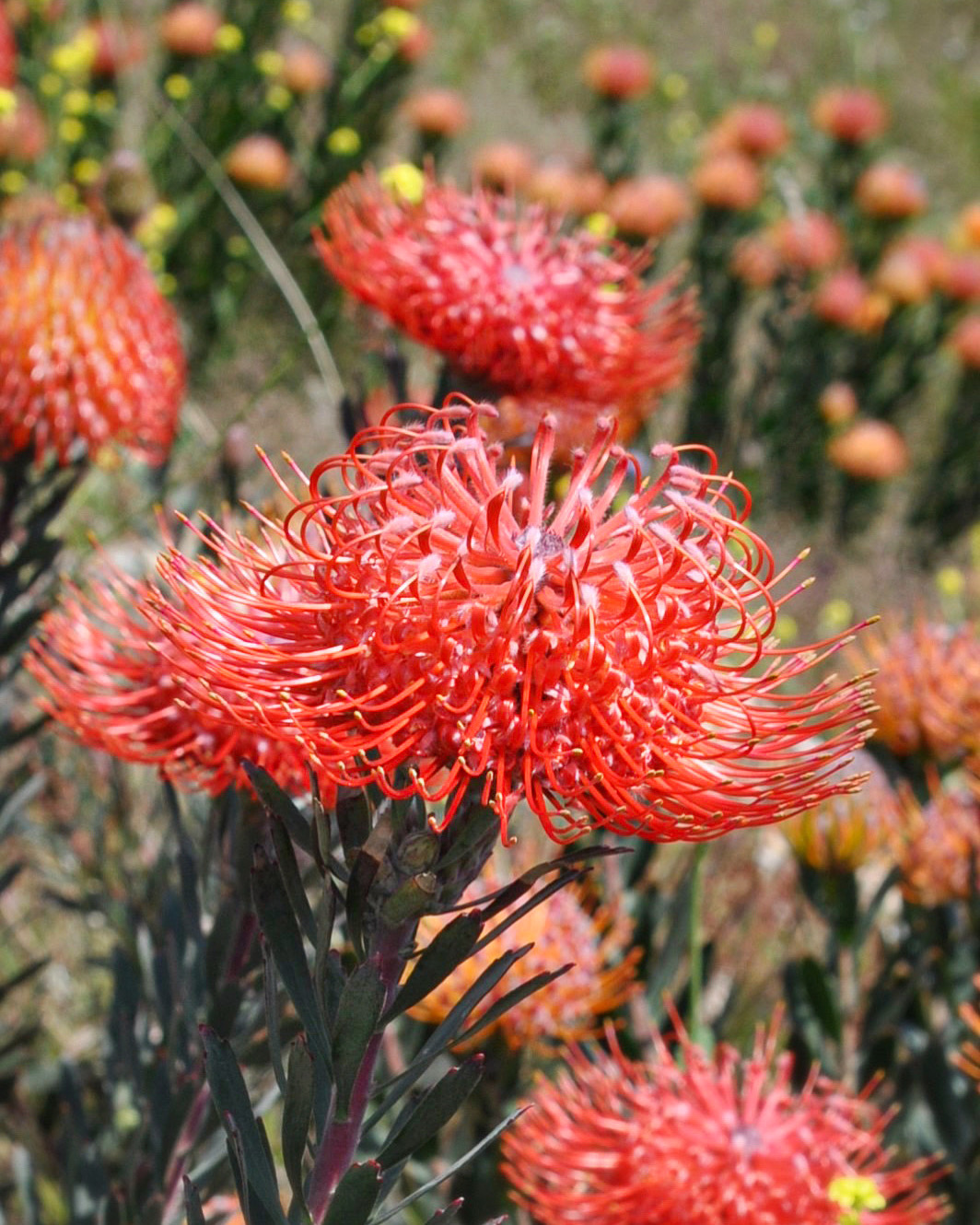
From the vibrant yellow blooms of High Gold to the soft, golden-peach hues of Brandi dela Cruz and the bright tri-color shades (red, orange + yellow) of Erubescens, we are falling for these classic spring-Leucospermum (and many more) all over again this season.


These prolific plants deliver breathtaking living color in the fields from March through June. The textural blooms are formed mainly with long, sprout-like structures that end in a round knob called a pollen presenter. Together, the mass of styles looks a lot like pins bristling from a “pincushion”, a similarity that has given rise to the popular name for this genus.


Leucospermum includes some forty-eight species as well as several new hybrids. Unlike flowers of the genus Protea, which rely on their showy bracts for visual appeal, Leucospermum put all their art into the colors of the flowers themselves as well as the flowing shape of each curving component.

Inspired by this fanciful protea and ready to grow your own? Here are a few tips:
  • Leucospermum flourish in full-sun exposure with good air movement around the plants. 
  • When transplanting, set plants into the soil at the same level that they were in the container. 
  • Plant on a mound or slope to promote excellent drainage in soil that is slightly acidic. 
  • Mulch to conserve water but keep mulch free of the crown of the plant. 
  • Water regularly until plants are established. 
  • Protect from frost.


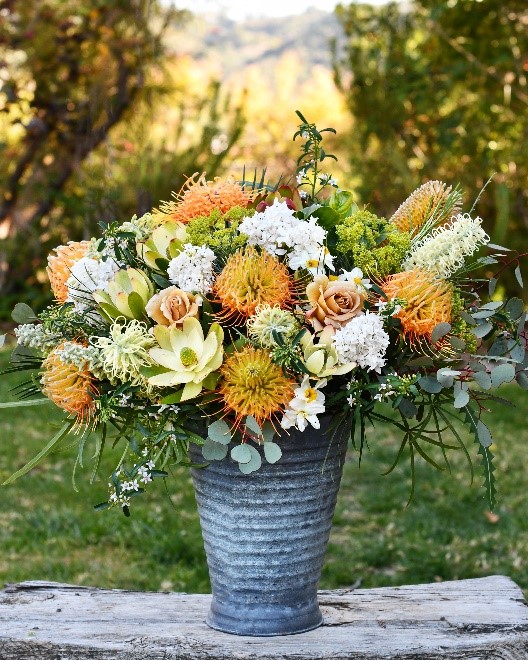
When harvested, Leucospermum are stunning when displayed in a vase on their own, or mixed with more traditional flowers like roses, tulips, ranunculus, snapdragons and more.

Friday, April 29, 2022

Growing Leucospermum – Pincushions


The fanciful Leucospermum plant brings so much pleasure to our hearts during this time of the year. The vibrant red, orange, peach, yellow and bi-colored flowers in bloom (generally mid-winter through spring) are formed mainly with long, sprout-like structures that end in a round knob called a pollen presenter. Together, the mass of styles looks a lot like pins bristling from a “pincushion”, a similarity that has given rise to the popular name for this genus.


Leucospermum include some forty-eight species, of which all but three are endemic to South Africa’s Cape Province. Unlike flowers of the genus Protea, which rely on their showy bracts for visual appeal, Leucospermum put all their art into the colors of the flowers themselves as well as the flowing shape of each curving component.


Leucospermum are considered Mediterranean plants, which is good news for anyone living in central and southern California. These stunning plants provide drama and stature in the fields and in gardens as well.


Leucospermum flowers are gorgeous in a vase on their own, but when accompanied with other proteas or other more traditional flowers like roses, anemones, dahlias or snapdragons they can make spectacular arrangements.


Growing Leucospermum:
  • Leucospermum flourish in full-sun exposure with good air movement around the plants. 
  • When transplanting Leucospermum, set plants into the soil at the same level that they were in the container. 
  • Plant on a mound or slope to promote excellent drainage in soil that is slightly acidic. 
  • Mulch to conserve water but keep mulch free of the crown of the plant. 
  • Water regularly until plants are established. 
  • Protect from frost.


Wednesday, April 17, 2019

Events: Farm Tours

Farm tours are a wonderful way to celebrate the spring!


This month, we had the pleasure to host two farm tours. These fun events provided us a welcome break from our normal day to day activities and give us the opportunity to make new friends.

We picked the perfect April mornings for both tours, blue skies and about 75 degrees. The tours started off by providing guests with a little ‘insider information’ on our farm and what we’re up to this time of the year. Then off to the greenhouse and nursery they went to see where everything begins, sprouts and develops its roots here on the farm. Next stop, the packing area for a quick peek inside the cooler and to watch our crew create bouquets and wreaths.


UCCE Master Gardeners of Riverside County - April 2nd


Public Farm Tour - April 13th

From sharing protea inspiration to shopping for plants for the garden, the tours served up the very best of the season, and here are a few of the highlights.


Sunday, November 18, 2018

Temecula Valley Garden Club


We were so excited to share our passion for Proteas with over 75 members of the Temecula Valley Garden Club. Hands down that had to be one of our favorite events this month. Our presentation consisted of all the things we love so much, the amazing array of proteas being grown here in California, growing tips and the delicious ways we arrange them… bouquets, designs and wreaths.

As many of you may know, autumn is the best time of the year to plant proteas. Plants that are established in the fall and winter grow faster in the spring and require less water when summer comes. This event gave us an excuse to bring along some plants, bouquets and wreaths, and for the members to take home and enjoy.


The Temecula Valley Garden Club is a nonprofit organization with 160 members, that aims to encourage interest in home gardening, promote better horticultural practices, conserve natural resources and aid civic groups. It also provides a wonderful place for those who share a common interest in gardening, to become acquainted and develop meaningful friendships.