Showing posts with label Flower. Show all posts
Sunday, December 19, 2021
Holiday Fave: Protea Ceres
Protea Ceres. A QUEEN SIZE bloom or what we call a ‘Hybrid Queen’→ this breathtaking protea is a splendid blend of magnifica and obtusifolia. When fully open, this flower is often 5 to 6 inches in diameter… making those crimson-red bracts with white feathery tips hard to miss in the field and definitely in a bouquet or arrangement!
Ceres has divine deep green leaves and sturdy long stems. And since this stunning protea is in blooms winter through early spring, there’s a bounty of beauty, love and joy to spread through the holiday season and right into Valentine’s Day.
Labels:
America Grown,
Ceres,
Christmas,
Crimson-Red. California Grown,
Divine,
Feathery Tips,
Flower,
Fynbos,
Holiday Favorite,
Holiday Season,
Hybrid Queen,
Long Stems,
Magnifica,
Obtusifolia,
Protea,
Winter
Wednesday, March 11, 2020
Protea Lady Di
Lady Di, a wonderful, ‘newbie’ here on the farm. This stunning hybrid queen is a blend of Protea magnifica ‘queen’ and compacta. With a medium-to-large size bloom, Lady Di plays off more of the soft, velvety appearance of compacta and lacks the woolly beard of the magnifica. Its long floral bracts are pink, plush and tipped in delicate white fur, then shading to cream at the base while surrounding a silvery-pink central dome. Lady Di is a bloom with plenty of charisma that will keep you enchanted for weeks.
Lady Di typically blooms winter through early spring, helping us beat the cold weather blues with its gorgeous color and fabulous texture. In the field it's sensational, but from there the designing ideas started flowing through my mind and mixed in a bouquet, there’s no doubt this protea ranks among the royal.
Labels:
Bloom,
Bouquet,
California Grown,
Color,
Compacta,
Flower,
Gorgeous,
Hybrid Queen,
In the Field,
Lady Di,
Magnifica,
Majestic,
Pink,
Protea,
Rainbow,
Resendiz Brothers,
Royalty,
Texture,
Winter
Sunday, February 9, 2020
In the Field: Leucadendron Ebony
Proteas are the ‘extraordinary’ something that can change nearly everything. From bouquets of fresh-cut flowers to elaborate arrangements, each inspires a burst of floral bliss and a lot of drama (the good kind). With the season’s abundance of Leucadendron scattered throughout the fields, we turn to a ‘newbie’ here on the farm.
Leucadendron Ebony or also called Burgundy Sunset. It’s stunning and mesmerizing! This Leucadendron was named because of its dark-purple leaf color. But when Ebony blooms in winter, the bracts that surround the ‘true flower’ turn a bright burgundy red. This year’s display is rich and intense. SO. Beautiful.
And for a little history… Ebony is thought to be a combination of Leucadendron Safari Sunset, laureolum and salignum red. This amazing plant was discovered in 2007 in a field of Leucadendron Safari Sunset near Auckland, New Zealand.
It’s no secret that we think this fabulous Leucadendron should definitely be receiving more LOVE from florists and designers for its wonderful foliage and… gorgeous winter flowers!
Sunday, June 23, 2019
In the Field: Leucadendron Safari Sunset
It’s officially ‘Safari Season'! Often one of the first hints of the season in our fields... leucadendron Safari Sunset serves as a gauge for warmer and longer days. These barometers of summer begin to emerge as spring winds down, revealing their deep-red bracts and long stems from July all the way through October.
There’s no doubt, Safari Sunset is the most well-known leucadendron, with millions of stems being grown in numerous countries around the world. A New Zealand raised hybrid cultivar, this mix of L. Laureolum x L. Salignum has proven the importance of crossbreeding in the protea industry.
Like a burst of color in the field, Safari Sunset brings a rich look to floral designs as well. Stunning no matter how you display it, this leucadendron looks great when blended with an array of flowers and greens or even used as a focal flower in boutonnieres. Here are some wonderful ways you can enjoy this fabulous foliage during the summer and well into fall.
Labels:
Bouquets,
Boutonnieres,
Bracts,
California Grown,
Color,
Cultivar,
Fall,
Floral Designs,
Flower,
Foliage,
In the Field,
Leucadendron,
Long-Stems,
New Zealand,
Red,
Safari Sunset,
Summer,
Texture,
Wreaths
Tuesday, February 26, 2019
Flower News: February’s Stories of Interest from Around the World
Protea plants are ancient mystery we haven’t solved
One day, an instructor brought a bouquet of flowers to a gardening class I was attending. Amongst the more common flowers was something that closely resembled an artichoke, but certainly not the kind that I have encountered on my plate!
This flower would grace any festive occasion.
At the end of class, I was lucky enough to be able to take it home. Upon drying, it continued to be almost as beautiful as when fresh, and I placed it in a vase with other less flamboyant dried flowers. This spectacular flower turned out to be a Protea, a native South African member of the Proteaceae.
Read more here
___________________________________________________________
US (PA): Official FTD World Cup
competition schedule announced
FTD World Cup, the world’s most prestigious floral design competition, will be held for the first time in the United States of America since 1985 at the PHS Philadelphia Flower Show from March 1-3, 2019.
The competition will include 23 of the world’s most creative designers selected to represent their country. FTD World Cup will take place on the main show floor of the Flower Show, the nation’s largest and longest-running horticultural event. Tickets are required to gain access to the Flower Show and the two FTD events in the Grand Ballroom at the Pennsylvania Convention Center, 1101 Arch Street, Philadelphia.
Read more here
____________________________________________________________
Here We Go! Check Out the Line Up of Farms For the 2019 Certified American Grown Field to Vase Dinner Tour
The fifth season of the American Grown Field to Vase Dinner Tour has just been announced, and we want you check out the destinations, grab all of your flower-loving friends and join us on a flower farm for an award-winning experience you’ll never forget. We couldn’t be more excited about the lineup of farms involved with this year’s floral-infused dinner tour. Known for stopping at America’s most beautiful flower farms, this year’s tour features amazing locations, including a peony farm in Alaska and a return visit to one of our most popular stops!
Read more here
Sunday, September 9, 2018
Protea King Arctic Ice
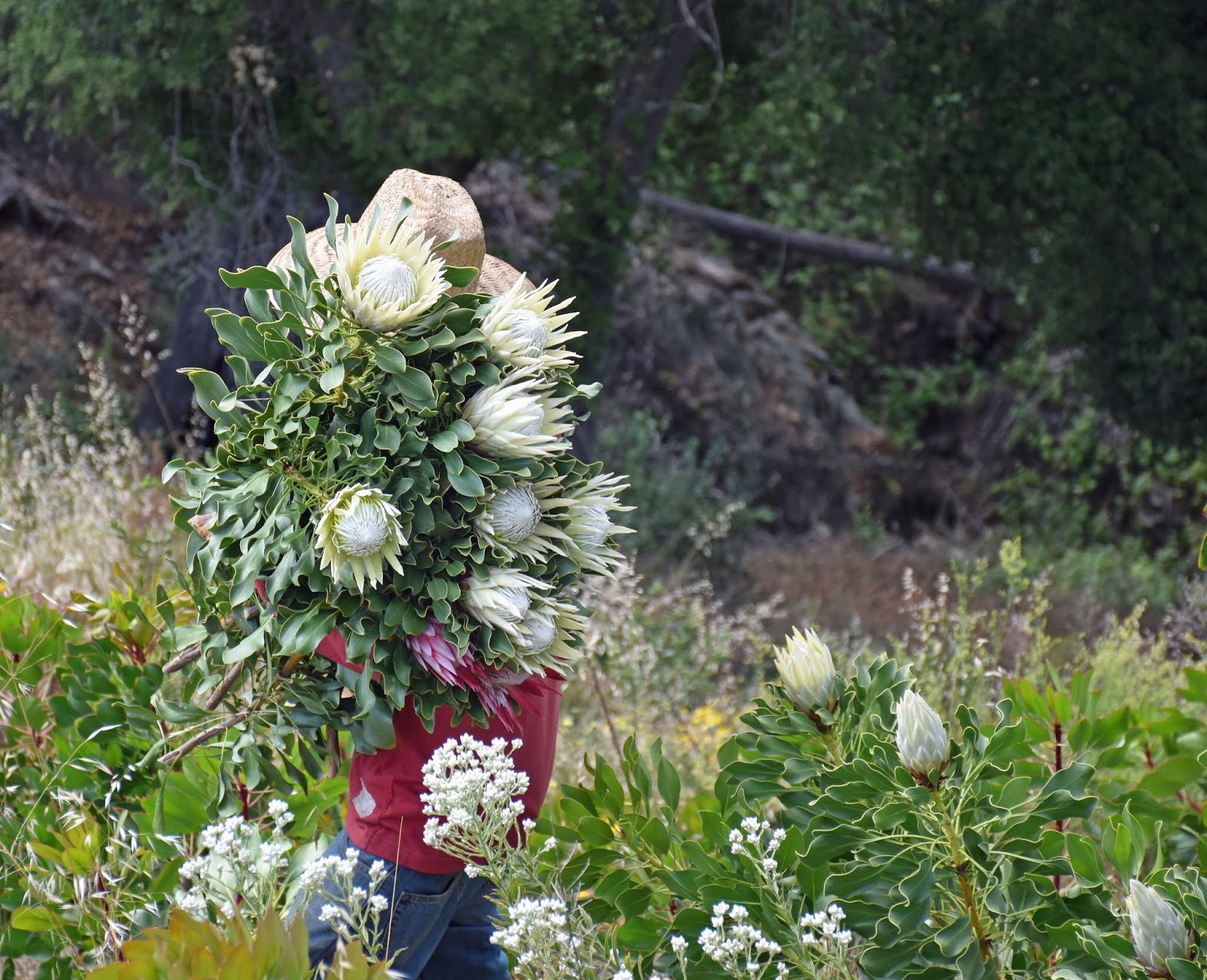
A luxurious Protea King is the crowning glory of a design or bouquet - these chic beauties offer an enchanting world filled with color, texture, and sizes to try. But not all Kings are created equal. In fact, some varieties are so special, they take nearly a decade to create. Such is the case for the voguish Arctic Ice, a magnificent White King Protea which has proven to be one of the most popular cultivars of this coloring of the king protea. The large flower heads are almost dinner plate in size with serrated edges much like a king’s crown. A mature plant can reach up to 5 feet in height and produce up to 50 blooms a year.
The King Protea is the national flower of South Africa — but they have been grown commercially here in California for 50 years. If you’re as crazy about these majestic flowers as we are, we suggest spending a little time in this Cynaroides’ realm.
Labels:
Arctic Ice,
Bouquet,
California Grown,
Chic,
Color Texture,
Crown,
Design,
Flower,
King Cynaroides,
Majestic,
National Flower,
Plant,
Protea,
Resendiz Brothers,
Royal,
Size,
South Africa,
Voguish,
Weddings,
White
Sunday, August 12, 2018
In the Field: Banksia Ashbyii
We're feeling inspired this summer with a fresh take on a favorite orange Banksia: Ashbyii or also called Ashby’s Banksia. What appears to be one large, showy cylindrical flower is actually a dense cluster of up to several thousand individual blossoms. Ashbyii’s beautiful orange flowers add vibrancy and texture in the field or garden and is a treat in floral arrangements, bouquets and wreaths.
Speaking of treats, banksia nectar once provided a sweet treat for Aboriginal people, who sucked the flower spike or soaked it in water to make a drink.
After flowering, the spike develops into a woody cone with tightly closed follicles, each containing one or two seeds. The cone or pod performs the all-important task of protecting the seeds until the time is right for germination – which, for most banksias, is after a BBQ or bushfire.
Flower Care:
- Keep cool when possible.
- Strip leaves from the bottom half of each stem.
- Re-cut at least 1/2" off each stem and place in cold water.
- Never bash or split stems.
- Replace vase water every day as Banksia are thirsty flowers.
- Never mist banksias as this could cause black marks to appear.
Labels:
Arrangements,
Ashby's Banksia,
Ashbyii,
Australian Native,
Bankisa,
Bouquets,
California Grown,
Care,
Cylindrical,
Farm,
Flower,
Harvest,
In the Field,
Nectar,
Orange,
Protea,
Texture,
Treat,
Vibrancy,
Wreaths
Saturday, March 24, 2018
Leucospermum Erubescens
Springtime is the most beautiful time of the year in our flower fields. Not only do we have a rainbow of colorful filler flowers, the leucospermum or "pincushion" fields are breathtaking! From yellow to coral and orange to red these gorgeous flowers are a sight to see. But have you seen leucospermum Erubescens? This stunning pincushion has blooms that are bright yellow & orange with red ribboning. The flower head is typically 4 to 8” wide and in clusters of 4-8 small pincushions at the tips of the stems. Each individual flower starts out yellow, gradually opening to reveal a bright crimson-red inside surface, and as the flower ages the yellow hues deepen and change to a reddish-orange. Erubesecens is harvested late winter through early spring.
Other common names for this fabulous leucospermum are Fruit Salad, Langeberg pincushion, orange flame pincushion and Oudtshoorn pincushion.
Labels:
California Grown,
Erubescens,
Flower,
Fruit Salad,
Gorgeous,
In the Field,
Langeberg Pincushion,
Leucospermum,
Multihead,
Orange,
Orange Flame Pincushion,
Oudtshoorn Pincushion,
Red,
Spring,
Yellow
Subscribe to:
Posts (Atom)


