Showing posts with label Aurea. Show all posts

Tuesday, September 27, 2022

Fall Must-Have: Grandicolor


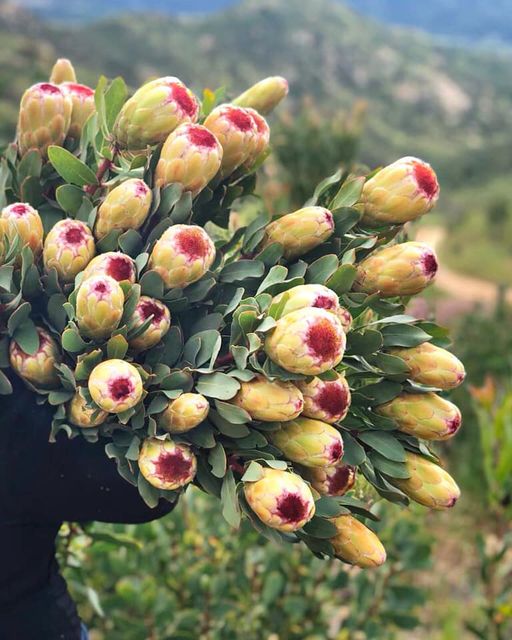
Grandicolor. This unique and alluring Protea is a mix of grandiceps and aurea, a rare combo to say the least. Shades of cream play across the bracts as they deepen to peach at the base. Bi-color pink and white lashes provide a delicate edging to the rusty-red center. Silvery-green egg-shape foliage with a leathery feel vigorously adorn the long and straight stem.


Just when you think your fall floral collection is complete, Grandicolor blooms. Designs rich in these early-autumn blooms reflect the spirit and joy of the upcoming holiday season. Plus, these exquisite, medium sized blooms can be tucked in and added to just about any fall arrangements — they’re chic, colorful, and just in time.


Tuesday, October 27, 2020

Protea Grandicolor


Current obsession: Grandicolor. This gorgeous protea is a mix of grandiceps and aurea… an unusual and unique combo to say the least. The cream bracts deepen to peach at the base and there is delicate pink + white lashes that surround the rusty-red center. The egg-shape foliage is small and leathery with a silvery-green hue and the stems straight and upright. Grandicolor produces exquisite, medium sized blooms off and on from autumn through spring. Dainty, cute and yeah, PERFECT for fall designs!


Thursday, October 24, 2019

In the Field: Protea Grandicolor


The protea fields are more colorful this fall thanks to 'Grandicolor’.
A cross of P. grandiceps and P. aurea, this hybrid cultivar from Australia combines features from both parent plants in a unique combination. The greenish-cream bracts, which deepen to tan at the base, have a delicate pinkish rim and conspicuous hairs like the grandiceps and surround rusty-red centers. The egg-shape foliage is small and leathery with a silvery-green hue and the stems straight and upright like the aurea. Grandicolor produces dainty, medium sized blooms off and on from autumn through spring.


Wednesday, October 10, 2018

In the Field: Protea Aurea


Protea aurea’s most distinctive feature is undoubtedly the shuttlecock-shaped flower heads, measuring about 3 to 5” long, forming from a multitude of small flowers clusters ... hence the common name Shuttlecock sugarbush. Aurea starts to flower in early fall when little else is blooming in the field. Leaves are oval and egg-shaped at the base. They are grey-green, soft and velvety when young. This is to protect the delicate soft leaves from drying out in the sun and from being eaten by wild animals. After the first year, the leaves harden and develop a waxy coating. The hairs disappear, and a smooth leaf surface remains.


The flowers bloom at the top of branches. Buds are cylindrical and when tightly closed resemble a candle. The outer bracts are cream-colored at the tip of the flower changing to green-brown at the base of the flower. When the bud begins to open, the bracts expand outwards and bend outwards. This exposes the many flowers within which stand straight up.


Until recently, Protea aurea has had a very small distribution range and was only found in the Southern Cape. It was first discovered in 1940 and not found again until 1965. The name, aurea, means golden and it is thought that this name was given in error after seeing a dried bloom, as the flower heads fade to a dull yellow when dry.

Aurea is serotinous, meaning the seeds are held within the dried flower heads on the plant for a long period of time. This protects the seed from being eaten by predators. When there is a fire, the mother plant is abolished, and the flower heads burst open and release the seeds. The seeds fall to the ground and germinate prolifically after the first winter rains.


Sunday, February 19, 2017

New in the Field: Grandicolor


Our fields are looking a little more colorful these days thanks to ‘Grandicolor’, a new hybrid protea from Australia. This beautiful cultivar is a combination of P. grandiceps and P. aurea, a very unusual and unique cross to say the least. Its greenish-cream bracts, which deepen to peach at the base, have a delicate pinkish rim and conspicuous hairs like the grandiceps and surround rusty-red centers. Grandicolor produces dainty, petite blooms off and on from autumn through spring. The egg-shape foliage is small and leathery with a silvery-green hue and the stems straight and upright like the aurea.


From our field to the vase Grandicolor lives up to its name!