Thursday, August 27, 2015

Wild Flowers of the Western State

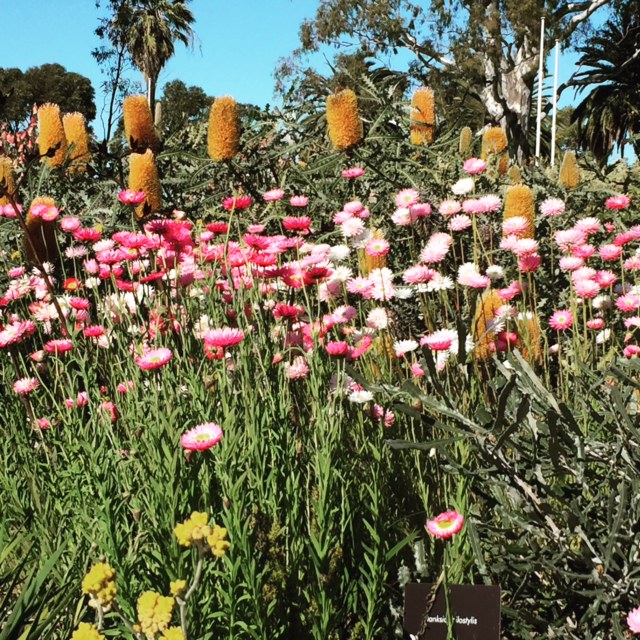
Western Australia is one of the richest wildflower areas in the world. Its great wealth lies not only in the large number of different species to be found but also in the great diversity of the size, shape, color, texture and form between individual flowers.


Wildflower Displays in Kings Park and Botanical Garden

There are over 8000 native plants in Western Australia with another 800 that have been introduced from other states or countries. In addition, a high percentage of native species are endemic, and found only in this part of the world. This is particularly so in the southwest portion of the state where it is estimated between 75% - 85% of the known wildflowers grow only within this small region and nowhere else on earth. Many of the flowers can truly be described as ‘unique’. The Kangaroo Paws, Bottlebrush, Grevilleas, Isopogons, Everlastings, Dryandras, and many of the Banksias and Waxflowers are botanical curiosities attracting international scientific interest.


From late summer through early spring (August and October), numerous exhibitions and festivals are held throughout the state by local enthusiasts to showcase and celebrate the wildflowers of the particular region. These festive events provide a fun and colorful way for both locals and visitors to gain an appreciation of the diversity of Western Australia’s flora.


A Taste of Chitterinng Festival Flowers

Tuesday, August 11, 2015

Gum Tree Flowers & Nuts
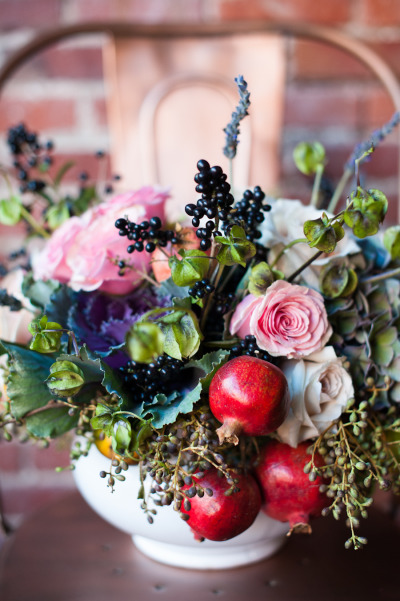

The gum tree or ‘eucalyptus’ is one of the most recognized Australian plants. It is no surprise that its lush green foliage has become an extremely popular addition to garlands, wreaths, bouquets and even large scale floral displays. However, did you know that many varieties of gum produce attractive flowers as well? Eucalyptus flowers are not typical flowers though, as these showy blooms are made up mostly of anthers and styles, rather than petals. This makes gum flowers much more delicate than many other cut flowers. Usually, these flowers are found in white, pink, yellow, and reddish shades. And, in most species, the buds appear in clusters on a single stem that develops on the axil of the leaves.


The cone-shaped fruits that develop are called gum nuts, which have valves that allow the seeds to be shed. These wonderful nuts come in several shapes and sizes and add unique color and texture to designs.


What to look for:

  • Flowers that are 1/2 open and fluffy looking.
  • Avoid wilted flowers.

Flower Care:

  1. Keep cool and out of direct sun light.
  2. Strip leaves from the bottom half of each stem. 
  3. Re-cut at least 1/2” off each stem and place in cold water.
  4. Use a preservative as this will keep flowers looking fresh.
  5. Replace vase water with fresh preservative.

Fun Facts:

  • Also known as gum trees, for the sticky sap that oozes out of the bark.
  • The name “Eucalyptus” came from the Greek words, “eu” meaning well and “kalyptos,” meaning covered, referring to the bud cap that initially covers the flower.
  • Eucalyptus is valued for its fast-growing wood.
  • Eucalyptus trees are among the tallest trees in the world.
  • The wood is commonly used to make digeridoos, a traditional instrument from Australia.
  • All parts of the plant can be used to make fabric dyes; colours range from yellow and orange through to green, tan, chocolate and red.

Sunday, July 26, 2015

The Allure of FYNBOS


Fynbos is one of the earth’s hot spots because of its exceptional biodiversity. It’s little wonder that Fynbos which literally means ‘fine bush’ has been touted for its unique type of vegetation that accounts for more than 80 percent of the plant species in the Cape Floral Kingdom. And, more than two-thirds of these plant species are not found growing naturally anywhere else in the world. Many of these amazing plants have been used for their decorative and gardening purposes, medicinal purposes and even their magical powers. Despite the growing interest in fynbos, it still remains a mystery to many people. Some species can be found growing right under their noses and they don’t even realize it.
 

Fynbos is composed of approximately 100 families with the three largest and most well known families being: the ericas, proteas and restos. With that in mind, there are plenty more families to get to know – Here are just a few of our favorites:


Agapanthus means ‘Flower of Love’ and is derived from the Greek agape’ meaning ‘love’ and anthos meaning ‘flower’. They are also known as the ‘lily of the Nile’ and the ‘African lily’ even though they are not a lily. Did you know in the world of magic the agapanthus is a highly respected plant? The roots can be used to make a love charm and their magical powers even ward off thunder. And, agapanthus can serve as a fire-break if you plant it close enough to the house.


Egyptians called the aloe vera plant “plant of immortality,” 6,000 years ago. Cleopatra applied the moist middle of the spiky plant to her body as part of her beauty regimen. Greeks used it to cure everything from baldness to insomnia and the Native Americans called it the “Wand of the Heaven.”


Leonotis leonurus is also known as wild dagga and lion's tail. Wild dagga flowers and leaves were smoked by the Hottentot tribe of southern Africa because of its euphoric effect. In traditional healing, wild dagga is used to treat fevers, headaches, coughs and skin rashes. It's also used as a charm to keep snakes at bay, and has been used to treat snake bites.


Tulbaghia Violacea or wild garlic is also called Society Garlic because Dutch settlers thought it was a more polite spice to use for flavoring dishes than true garlic particularly for social events. And, the Zulu used both the flowers and the leaves to make hot seasoning with meat and potatoes. Tulbaghia is a disinfectant, and the bulb has been used to treat cough and colds.

Sunday, July 19, 2015

Heath or Heather?

Did you know the Ericaceae family is divided into two different genera of plants: heaths and heathers? Although both belong to the same family, they are botanically different and are divided into the Erica genus and the Calluna genus. The heaths belong to the Erica genus and there are approximately 4,500 species worldwide and of these 700 occur in the Cape Floral Kingdom, making them the largest family of fynbos . 


The Erica with its upright spirals of brilliant blossoms can be described, as simply elegant. The vibrant blossoms vary in shape and size from tiny to several inches in length and come in virtually all color combinations except blue. Other than heaths' greater susceptibility to cold weather, the main difference between heaths and heathers is that heaths have needlelike leaves rather than flat leaves; and come in taller shrub forms and even some small trees.

Here’s just of a few of our favorites grown here in Rainbow:


Erica Sparsa


Erica Verticillata


Erica Versicolor


Erica Baueri


Erica Baueri - White

For a glimpse of more heaths here’s a link to our Pinterest Board!


Ericas have become a welcome addition to our world of flowers!

Sunday, July 12, 2015

Pomegranate – The Tree of Life


Did you know many scholars believe pomegranate to be the true biblical Tree of Life, and that it was actually a pomegranate fruit, not an apple, that Eve enjoyed?


The English word ‘pomegranate’ is from Latin ‘pomum granatum’ which means ‘apple of many seeds.’ Because of their many seeds, this fruit has been associated with love, fertility and abundance. And, the Greek goddess of love, Aphrodite, is credited in Greek mythology with planting the first tree. The pomegranate appears as a romantic symbol in sonnets and literature dating back centuries.


So naturally, now that pomegranate season is upon us it brings a wonderful opportunity to explore some of the amazing decorative possibilities of this ‘sinful’, yet sensuous fruit!


Oncewed


Thursday, July 9, 2015

Kings Rein

If you’re thinking brides have gone wild for Kings, you’re right— just take a look at some of the recent wedding blogs.  It’s safe to say we’re seeing these awesome protea being used in wedding bouquets and centerpieces at least several times a week - and we’ve got the Pinterest board to prove it.  There’s a little something there for every King connoisseur, from featuring single stems to creating more lavish designs with an array of fabulous blooms and a King as the focal flower.  If you’re as crazy about these chic flowers as we are, we suggest spending a little time in the Cynaroides’ realm.


Sunday, June 28, 2015

Protea Care & Handling: Tips From Chrysal


With alluring flower colors, exotic shapes and rugged woody stems, proteas are the new “It” bloom. The family tree originates in South Africa and these blooms love sun and sugar, especially Eximia, Latifolia, and Dutchess varieties.


The key to long vase life and minimizing leaf blackening is attention to temperature and processing stems into flower food, full sugar flower food. The best holding temperature range for protea is 38-42F. Cold temperatures and a well-lit cooler (proteas like to rest with the light on) greatly reduces leaf blackening.

Processing stems in flower food on arrival rather than selling dry from the box also limits blackening issues. Fill buckets with full-sugar flower food—Chrysal Professional #3, the same product for filling vases. It’s best to use the powder formula because protea like glucose and the Pro #3 sugar ingredient is 100% glucose.


What’s the difference between Chrysal Professional #2 holding solution and Professional #3 vase solution? The amount of sugar. Both solutions keep the water clean and flowing up to 5-6 days. Both lower pH to stimulate flow, but holding solutions (Pro #2) contains less sugar than vase solutions (Pro#3). Holding solutions are perfect for wholesale and retail display and wet-pack shipping, but protea, tuberoses and lisianthus are some of the exceptions—these blooms thrive best in high sugar solutions.


Many Thanks to Chrysal and Gay Smith for these helpful tips!